A basement can turn into a usable space with the right decor. Adding rugs, lighting, and furniture makes it a place for family time or storage. Basements often feel damp or dark, so decor needs to fit those conditions. This guide looks at options available today, to help you decide what works for your basement.
I started thinking about basement decor when I wanted to use my space for a game room. I learned that simple changes, like better lighting or a dry rug, made a big difference. This buyer’s guide covers what to consider, types of decor, and tips based on my experience and what’s out there to help you plan your basement setup.
What to Consider Before Buying
Measure your basement first. Note the length, width, and ceiling height—many basements are 7×10 feet or larger. Check for moisture or leaks, as this affects material choices. Set a budget—decor can range from $20 for a lamp to $500 for a sofa or built-in shelves. Think about the basement’s use, like a play area or office, to guide your picks.
Look at the current state. Is the floor concrete or carpeted? Does it have windows for light? Basements with little natural light need brighter decor, like white walls or lamps. Temperature matters—cold floors need rugs, and poor ventilation needs air movers. Decide on a style, like industrial or cozy, to keep things consistent and avoid clutter.
Types of Basement Decor
Rugs add warmth to cold floors. Small area rugs cost $30-$100, while large ones can be $150-$300. Look for mold-resistant materials like polypropylene or wool with a rubber backing. Furniture fits the space’s purpose. Sofas range from $200-$600, chairs $50-$150, and tables $100-$250. Pick sturdy pieces that handle humidity.
Lighting brightens dark corners. Floor lamps start at $20, table lamps at $15, and recessed lights at $50 each for installation. Storage solves clutter. Shelves cost $30-$100, cabinets $150-$400, and plastic bins $10-$30 each. Wall decor, like framed art or mirrors ($20-$100), adds personality—use moisture-resistant frames. Plants, like snake plants, thrive in low light for $15-$40.
Materials and Durability
Materials must handle basement conditions. Vinyl or laminate resists moisture for flooring or rugs better than wood, which warps without sealing. Metal shelves or frames work if coated to prevent rust. Fabric furniture needs water-resistant covers—leather or polyester holds up longer than cotton. Plastic bins are cheap and mold-proof for storage.
Durability depends on use. A playroom needs tough rugs and furniture, while a storage area needs sturdy shelves. Check care instructions—some rugs need vacuuming, others spot cleaning. Warranties, if included, last one year for manufacturing issues. Test items after setup for signs of dampness or wear, especially in humid months.
Where to Buy
You can shop online or in stores. Amazon, Walmart, and Wayfair offer decor from $10 to $600, with reviews to check quality—aim for 4 stars or higher from many users. Local options like Home Depot or IKEA let you see items, with prices matching online. Rugsource or 1StopLighting sell specific items like rugs or lights, often with free shipping over $50-$99.
Second-hand stores or Craigslist offer deals—rugs or furniture might cost $20-$100. Measure items before buying used to ensure fit. Sales occur around holidays like July or December, with 10-20% off, but read terms. Shipping takes one to two weeks online, with returns usually within 30 days if unused. Contact support with site phone numbers if needed.
Installation and Maintenance
Setup varies by item. Rugs lay flat after unrolling—use double-sided tape for concrete. Furniture needs assembly—follow manuals or hire help for $50-$100. Lamps plug in, but recessed lights need wiring, costing $100-$200 with an electrician. Shelves mount with screws and a level—overloading risks collapse.
Maintenance keeps decor in shape. Vacuum rugs weekly. Wipe metal or vinyl with a damp cloth monthly. Check furniture covers for mold every few months—wash if needed. Replace worn items like rugs every two to three years. Keep a tool kit for loose screws or adjustments, and use a dehumidifier to control moisture.
Styles and Trends Today
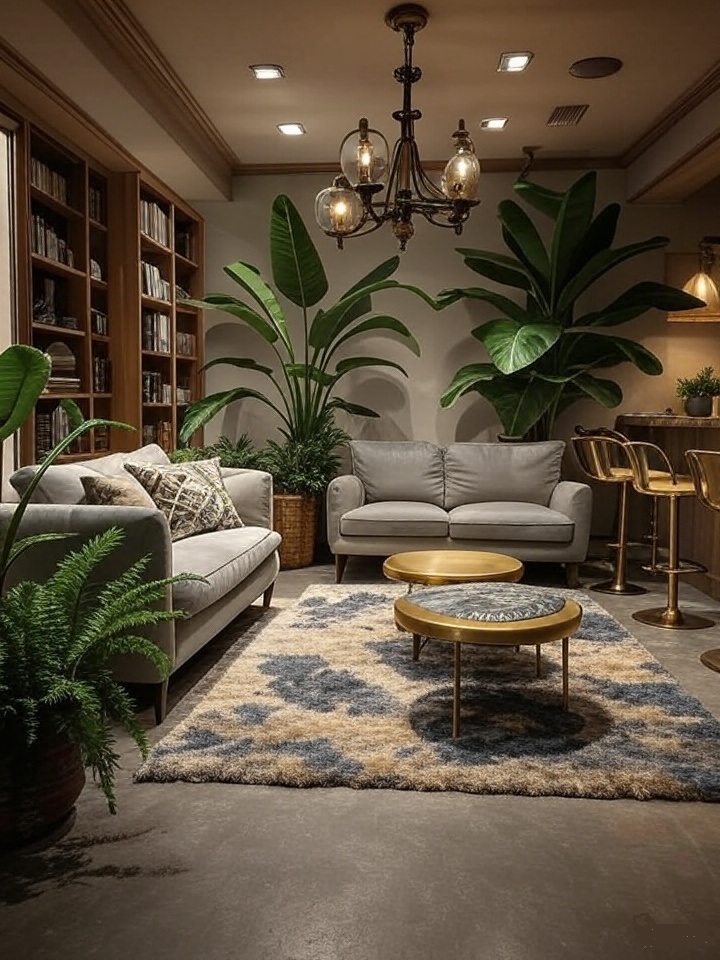
As of current trends, styles focus on function. Industrial looks use metal shelves and exposed pipes, popular for man caves. Cozy setups favor soft rugs and warm lighting, good for family rooms. Nature themes with wood accents or plants fit eco-conscious homes. Bold colors like black or green work in larger basements.
Trends include multi-use furniture, like sofa beds ($300-$700), for guest spaces. LED strips ($20-$50) add customizable light. Textured walls or rugs add depth—look for woven patterns. Check Pinterest for ideas, but match to your basement’s size and light. Avoid overcomplicating—pick what fits your needs.
Budgeting Tips
Set a budget based on your plan. A basic setup—rug, lamp, shelves—costs $100-$200. A full room with furniture and lighting might reach $800-$1,200. Focus on essentials like lighting or storage if money is tight. Buy sets, like a lamp and shade for $40, to save.
Wait for sales in July or winter for discounts. Buy used furniture or rugs to cut costs. Track expenses with a list—add 10-15% for installation or repairs. Stick to your budget to avoid overspending, especially on big items like sofas.
Things to Watch Out For
Some decor has issues. Cheap rugs may trap moisture and mold. Heavy furniture can damage weak floors—check weight limits. Custom shelves take weeks to arrive and may not return easily. Poor lighting installation risks safety—hire pros if unsure.
Online pictures can misrepresent colors or sizes. Read return policies—some charge restocking fees. Dampness can ruin decor, so use a dehumidifier. Plan ahead to avoid costly fixes or replacements.
Conclusion
Decorating a basement means planning for its unique challenges like moisture and light. Rugs, furniture, and lighting can make it a practical space. With the right materials and care, these items last and suit your needs. Use this guide to measure, compare, and choose decor that works for you today.
FAQs About Basement Home Decor
You need rugs, lighting, furniture, and storage like shelves or bins.
A basic setup costs $100-$200; a full room can be $800-$1,200.
Yes, but seal it to prevent warping from moisture.
Vacuum rugs, wipe surfaces monthly, and check for mold on furniture.
Small items like rugs are DIY. Lighting or shelves may need a pro.
They cost $20-$50 and add light, but need wiring. Decide if you need them.
Yes, most stores allow returns within 30 days if unused, but check fees.
Try Amazon, Home Depot, Rugsource, or second-hand stores.
Online orders take one to two weeks, depending on stock.
Industrial, cozy, and nature themes are common, plus multi-use furniture.