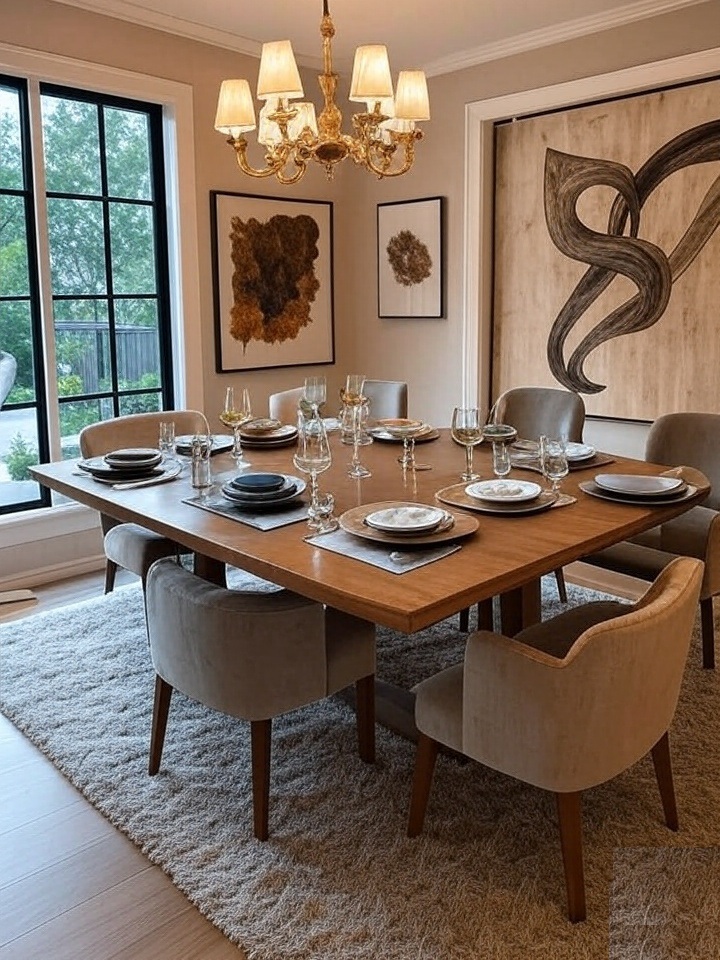
Your dining room is more than just a place to eat—it’s where you gather with family, host friends, or even work from home. Dining room decor can feel overwhelming with so many choices, from tables and chairs to lighting and accessories. This guide breaks down the essentials to help you create a dining room decor that’s functional, comfortable, and reflects your style. We’ll focus on practical tips, key pieces, and what to consider before buying.
Start by thinking about how you use the space. Do you host big dinners or need a cozy setup for daily meals? Your lifestyle shapes your choices, from the size of the table to the type of lighting. This guide covers the main elements—tables, chairs, lighting, storage, rugs, and accents—while keeping budget, space, and durability in mind. Let’s dive in.
Dining Tables
The dining table is the heart of the room. Its size and shape depend on your space and needs. Measure your dining area first—leave at least 36 inches between the table and walls or furniture for easy movement. For small spaces, a round or oval table (48-60 inches) works well, seating 4-6 people without taking up too much room. Rectangular tables (72-96 inches) are better for larger rooms or bigger gatherings, seating 6-10.
Material matters for both look and upkeep. Wood tables, like oak or walnut, are durable and timeless but can scratch or stain without care. Glass tables feel modern and make small spaces look bigger but show smudges and need frequent cleaning. Metal or laminate options are budget-friendly and low-maintenance but may lack warmth. Consider your lifestyle—families with kids might prefer something sturdy and easy to clean. Prices range from $200 for basic models to $2,000+ for high-end wood or custom designs. Check weight capacity if you plan to place heavy items on it.
Dining Chairs
Chairs should be comfortable and match your table’s style. Aim for 6-8 inches of space between seats for elbow room. Upholstered chairs add comfort but can stain—look for stain-resistant fabrics like microfiber or leather if you have kids or pets. Wooden or metal chairs are easier to clean but less cozy for long dinners. Test chairs for comfort, especially seat height (17-19 inches) and back support.
Mixing chair styles, like pairing wooden chairs with an upholstered host chair, adds personality. Budget options start at $50 per chair, while designer or custom pieces can hit $300+. Buy in sets for consistency, or mix and match for an eclectic look—just ensure heights align with your table (table height is usually 30 inches). Check weight limits (typically 250-300 pounds) for durability.
Lighting
Lighting sets the mood. A chandelier or pendant light above the table is a classic choice, but make sure it’s proportional—about one-third the table’s width. Hang it 30-36 inches above the table to avoid glare. Dimmer switches are a must for flexibility, letting you adjust from bright for tasks to soft for dinners. LED bulbs save energy and last longer, though they’re pricier upfront ($5-15 per bulb).
Wall sconces or floor lamps can add warmth to corners, especially in larger rooms. For small budgets, a single statement light ($100-$500) does the job. High-end chandeliers can cost $1,000+. Ensure the fixture’s weight is supported by your ceiling’s electrical box—check with an electrician if unsure. Avoid overly trendy designs that might feel dated in a few years.
Storage
Storage keeps your dining room decor clutter-free. Buffets or sideboards are great for storing dishes, linens, or barware. Look for pieces 36-48 inches wide for small spaces or 60-72 inches for larger rooms. Wood is common, but glass-fronted cabinets add a modern touch. Check drawer and door mechanisms for smooth operation—cheap hardware can break quickly.
If space is tight, consider a bar cart (starting at $100) for flexible storage or a hutch for vertical space. Prices range from $150 for basic sideboards to $1,500 for custom or antique pieces. Make sure the height (typically 34-36 inches) complements your table. Built-in shelves are an option for permanent storage but require installation.
Rugs
A rug anchors the dining room decor and adds warmth. Size is key—choose one that extends 24-36 inches beyond the table’s edges so chairs stay on it when pulled out. For a 6-person table, an 8×10-foot rug works; for 8-10 people, go for 9×12 or larger. Low-pile rugs (under 0.5 inches) are easier to clean than shaggy ones, especially under a table where crumbs fall.
Natural fibers like wool are durable but pricey ($300-$1,000). Synthetic rugs, like nylon or polyester, are cheaper ($100-$500) and resist stains. Patterns hide spills better than solids. Vacuum regularly and spot-clean spills immediately to avoid permanent stains. If your floor is already bold, skip the rug to avoid visual clutter.
Wall Art and Mirrors
Wall decor adds personality. A large piece of art or a gallery wall above a sideboard makes a focal point. Mirrors are great for small spaces—they reflect light and make the room feel bigger. Choose frames that match your table or chairs for cohesion. A single large piece (24×36 inches or bigger) works better than tiny art with dining room decor.
Budget art starts at $50; custom or original pieces can cost $500+. Mirrors range from $100 for simple designs to $1,000 for ornate ones. Hang art at eye level (about 60 inches from the floor to the center). Avoid overloading walls—one or two pieces are enough for most rooms.
Tableware and Accessories
Tableware and accents tie the room together. Start with versatile basics: white or neutral plates and glassware work for any occasion and cost $20-$100 for a set. Add seasonal linens or napkins for color. Centerpieces like vases, candles, or a runner add style but keep them low (under 12 inches) to avoid blocking conversation.
Barware, like decanters or wine glasses, can double as decor on a sideboard. Plants or fresh flowers bring life but avoid anything too fragrant that might clash with food. Budget $50-$200 for tableware and accents. Rotate pieces seasonally to keep the look fresh without overspending.
Budget Considerations
Set a budget before shopping. A basic dining room decor setup (table, 4-6 chairs, lighting, rug) can cost $1,000-$3,000 for budget-friendly pieces. Mid-range setups run $3,000-$7,000, while high-end or custom designs can hit $10,000+. Prioritize the table and chairs since they get the most use. Shop sales, secondhand stores, or online marketplaces for deals, but check quality—cheap furniture often wears out fast.
Mix high and low pieces to save money. For example, pair a quality table with budget chairs or a statement light with simple accessories. Avoid overspending on trends—stick to timeless pieces for longevity. Always measure your space and double-check return policies before buying.
Conclusion
Decorating a dining room is about balancing function and style. Focus on how you use the space, measure carefully, and choose pieces that fit your lifestyle and budget. A good table and comfortable chairs are the foundation, while lighting, rugs, and accents add personality. Take your time to find durable, versatile items that you’ll enjoy for years. With a clear plan, you can create a dining room decor that’s both practical and inviting.
FAQs
- What size dining table should I get?
Measure your space and leave 36 inches around the table for movement. A 48-60-inch round table seats 4-6; a 72-96-inch rectangular table seats 6-10. - How many chairs do I need?
Allow 24 inches per chair for comfort. A 4-person table needs 4 chairs; a 6-8-person table needs 6-8 chairs. - What’s the best material for a dining table?
Wood is durable but needs care. Glass is modern but shows smudges. Metal or laminate is low-maintenance but less warm. Choose based on your lifestyle. - How do I choose dining room decor lighting?
Pick a chandelier or pendant one-third the table’s width, hung 30-36 inches above. Add a dimmer for flexibility. Wall sconces or lamps add extra light. - Do I need a rug under my dining table?
A rug adds warmth but isn’t required. Choose one 24-36 inches larger than your table. Low-pile synthetic rugs are easiest to clean. - How do I make a small dining room feel bigger?
Use a round table, light colors, and a mirror to reflect light. Avoid heavy furniture or too many accessories. - What’s the best way to store dining room items?
A buffet or sideboard (36-72 inches wide) works for dishes and linens. Bar carts or hutches are good for small spaces. - How much should I spend on dining room decor?
A basic setup costs $1,000-$3,000. Mid-range is $3,000-$7,000. Prioritize the table and chairs for quality. - Can I mix different chair styles?
Yes, mixing styles adds personality. Ensure seat heights (17-19 inches) match the table (around 30 inches) for comfort. - Where can I find affordable dining room decor?
Check online marketplaces, secondhand stores, or sales at retailers. Mix budget pieces with a few quality investments for balance.